

Running Call of Cthulhu for the first time can feel intimidating. The Keeper has to play the world, the mystery and the monsters. The good news is that the game is forgiving, and a first session doesn’t need to be perfect. It needs to be tense, clear and finished in one evening. This guide covers how to get there.
Before the session
1. Pick a short, ready-made scenario.
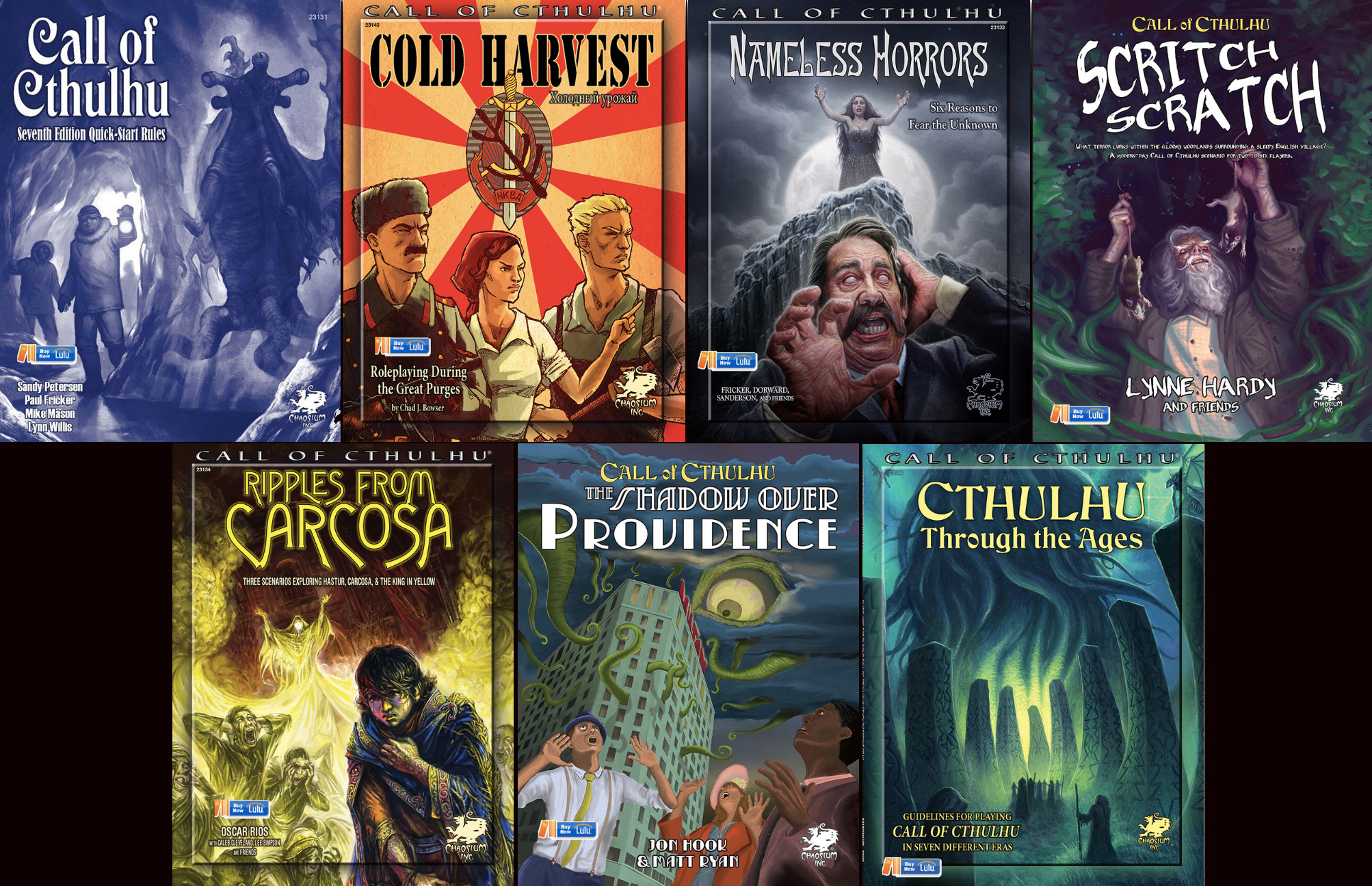
Don’t write your own for a first run. A published one-shot has the clues, locations and NPCs laid out for you. The free Quick-Start rules from Chaosium include an introductory scenario (“The Haunting”, if we recall correctly), which is a good place to start. Check the current listing to confirm what it includes.
2. Read the scenario twice.
Once for the story, and once for the structure: where the clues are, what happens if the players skip a location, and what the climax requires. Mark the three or four things the investigators must find, and make sure each has more than one route.
3. Prepare pre-generated investigators, or build them together.
For a first session, pre-generated characters save an hour. If your group wants to build their own, do it in a separate session zero. Either way, make sure everyone knows their occupation and their two or three best skills.
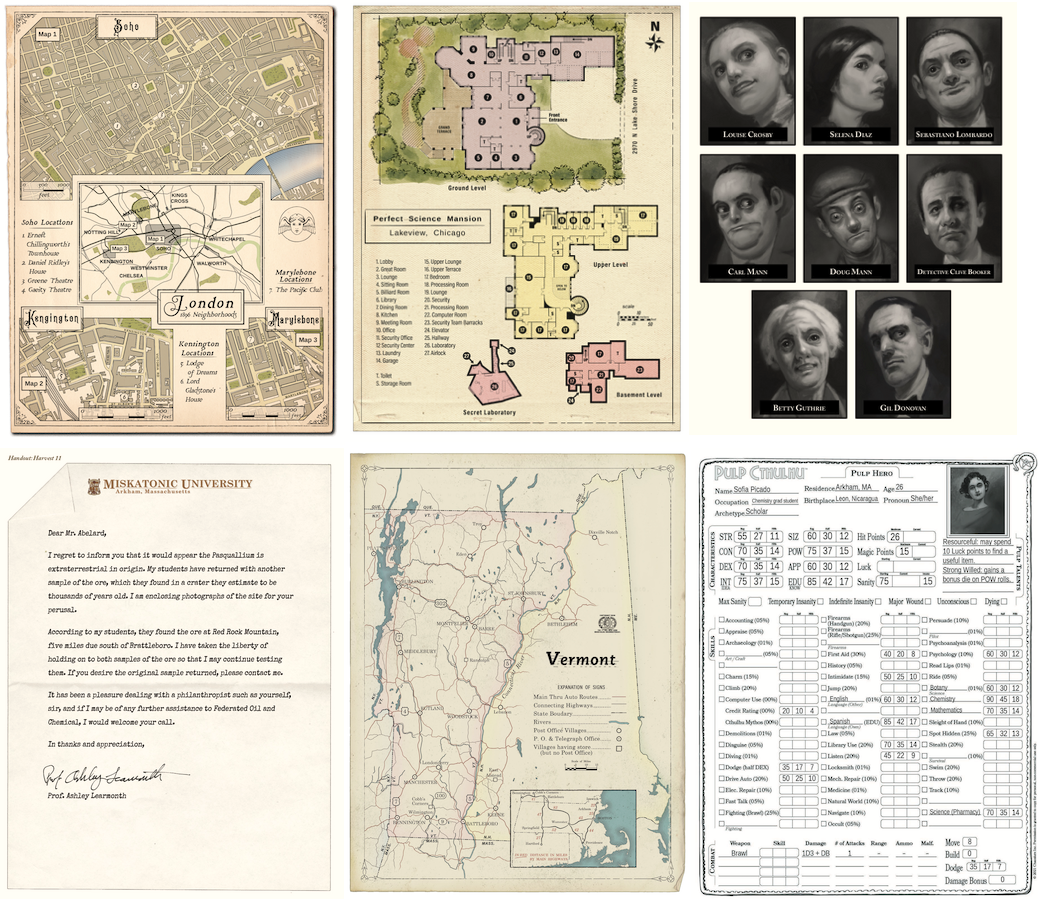
4. Prepare handouts and a few names.
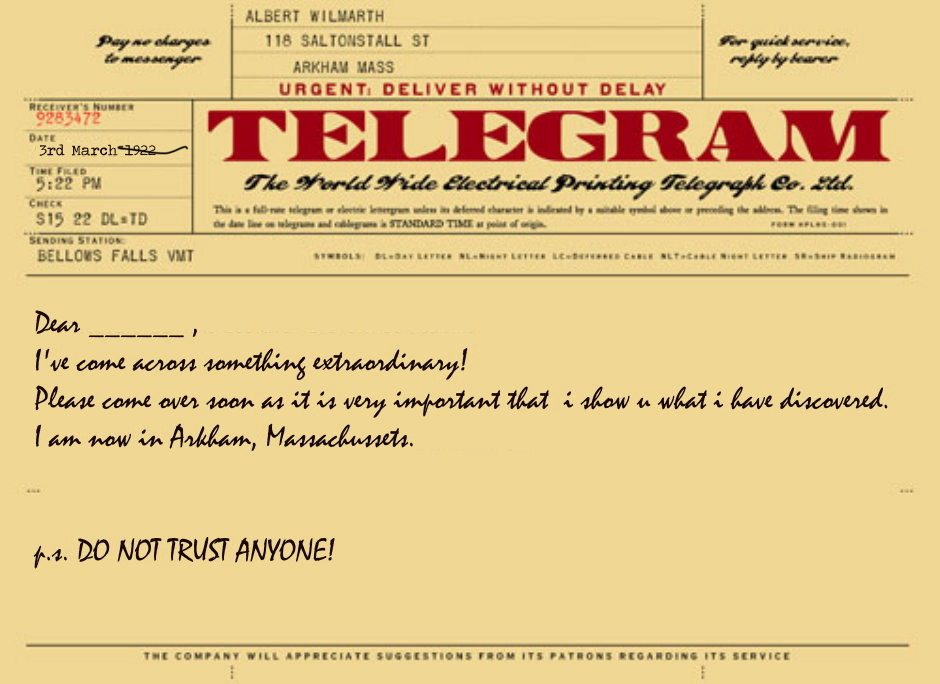
A newspaper clipping, a letter or a map makes a clue feel real. Keep a short list of spare NPC names, since players will talk to someone you didn’t plan for.
Setting the table
- Explain the tone. Tell players that investigators are ordinary, fragile people, and that death and madness are part of the game. This avoids disappointment.
- Agree on boundaries. Horror can touch uncomfortable themes. A quick conversation about what’s off the table, before you start, keeps the evening enjoyable for everyone.
- Set the mood lightly. Low lighting, quiet background music or a candle help, but don’t overdo it. The atmosphere comes mostly from your voice.
The rules you actually need
You don’t have to explain the whole rulebook. For a first session, these are enough:
- Skill rolls. Roll percentile dice and try to get equal to or under the skill. Hard and Extreme successes (half and one-fifth of the skill) matter in some situations.
- Pushing a roll. After a failure, a player can try again if they justify it and accept that a second failure will be worse.
- Sanity. Explain that seeing horrifying things costs Sanity points, and that a Sanity roll is how the character resists.
- Luck. A resource players can spend to nudge rolls.
- Combat. Briefly. Tell players that fighting is dangerous and usually a bad idea.
Look the rest up as it comes. Pausing to check a rule is fine, and it’s better than guessing wrong and breaking trust.
Running the session
Open with a hook.
Give the investigators a reason to be somewhere, such as a letter from a friend, a missing relative or an odd job. Establish the setting in a few sentences and let them start asking questions.
Let clues find the players.
This is the most common Keeper mistake. If a clue is essential and the player fails the roll, don’t leave the group stuck. Give it to them anyway, perhaps with a cost, or let them succeed and move on. Failed rolls should add complications rather than dead ends.
Describe, don’t announce.
Instead of “a creepy basement”, say the stairs are slick with damp, there’s a smell like old pennies, and something shifts behind the furnace. Concrete details create dread more effectively than adjectives.
Slow down at the scary moments, speed up elsewhere.
Skip travel and shopping. Spend your time on the discoveries, the confrontations and the decisions.
Usinging Sanity fails as a tool.
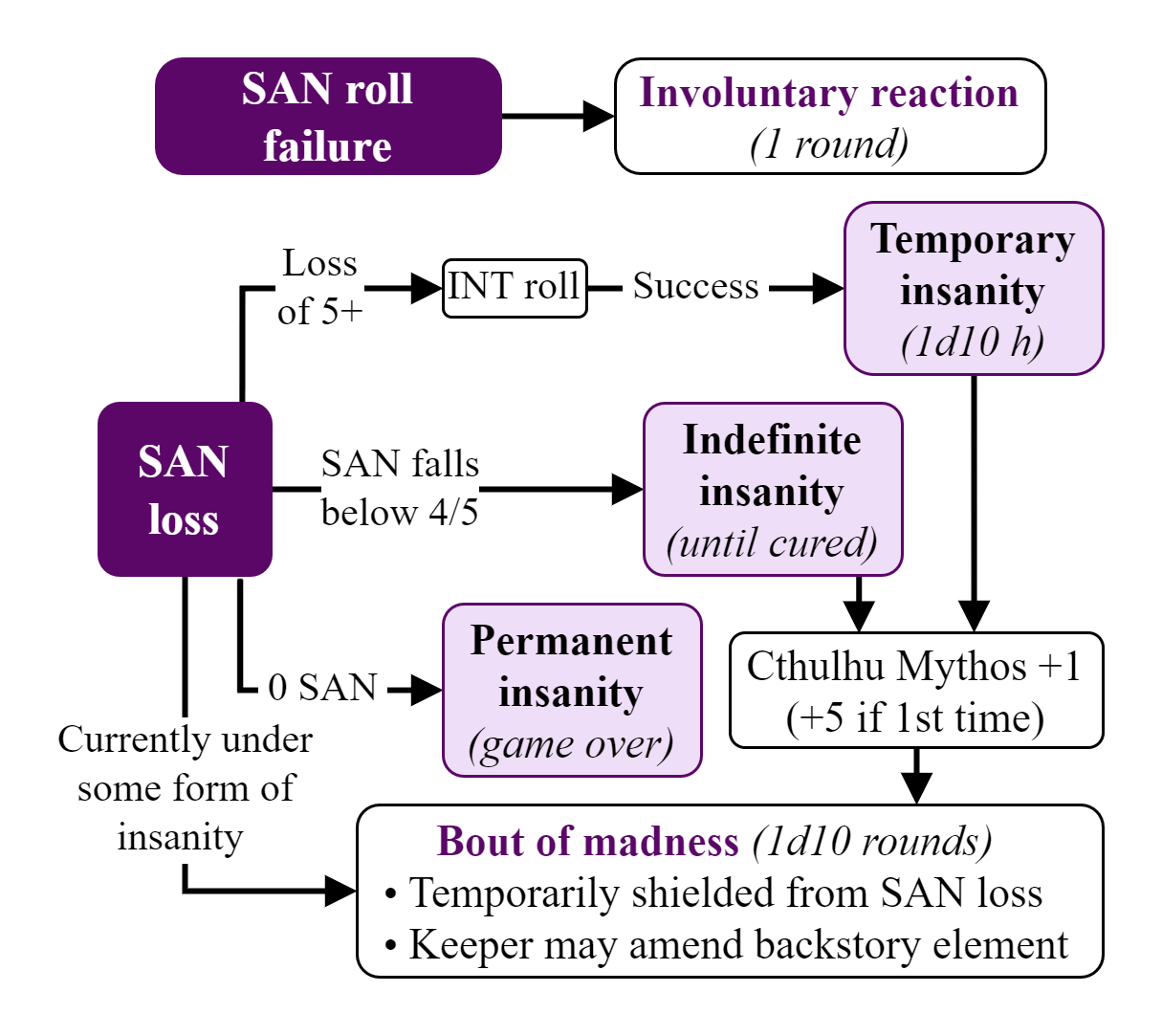
A failed Sanity roll is the best moment in the game to stop treating the dice as bookkeeping. Subtracting points from a number is forgettable. A character who suddenly can’t stop giggling at a corpse is not.
We like to treat every failed Sanity roll as a prompt for something that happens in the fiction, and we usually attach a small consequence that cuts both ways: a bane, a boon, or both.
Bane and boon: the idea
Madness in the Mythos isn’t only loss. A mind pushed past its limits can break in ways that are useful in the moment and costly later. Pairing the two keeps the player interested in their own breakdown, rather than feeling punished.
- Bane: the character is hindered in a way the table can see, such as a penalty die on social rolls, an inability to leave a room, or a compulsion they have to act on.
- Boon: the same madness gives them an edge, such as a bonus die on one kind of roll, a flash of insight, or sudden calm when everyone else is panicking.
- Both: the most interesting outcomes. A character who is convinced the wallpaper is whispering may hear a real clue in it, but won’t be able to hold a normal conversation until they leave.
Hysteria at the silliest things
Our favourite use of this is hysterical reactions that are completely out of proportion, and it’s a technique with a long history in horror. When a character fails a Sanity roll, the horror doesn’t have to produce screaming. It can produce:
- Uncontrollable laughter at a dull object, such as a teacup, a clerk’s moustache or a hat on a hook.
- Fixating on one trivial detail (“did anyone else notice his left shoe is untied?”) and being unable to let it go.
- Cheerful, inappropriate politeness to a monster.
- Counting, humming or reciting a nursery rhyme at the worst possible moment.
This works because the contrast is unsettling. The players know something terrible just happened, and the character’s response is absurd, which makes the absurdity feel wrong. Table laughter turns uneasy once everyone realises the character can’t stop. It also gives players a safe, funny way to lean into their character’s breakdown.
Examples
| Trigger | Reaction | Possible bane | Possible boon |
|---|---|---|---|
| Finding a mutilated body | Fits of giggles at the sight of the wallpaper pattern | Penalty die to Persuade and Fast Talk until calmed | The investigator notices the pattern repeats in a hidden symbol |
| Seeing a creature from the Mythos | Politely introduces themselves and offers it tea | Can’t keep quiet or hide | Calm enough to avoid freezing when others run |
| Reading a forbidden book | Becomes obsessed with counting the ceiling tiles | Distracted in conversation | Bonus die on one Library Use or Occult roll, since the count matters |
| A ritual goes wrong | Starts humming a lullaby they’ve never heard | Draws attention in a crowd | Recognises the tune later at a key scene |
Let players make decisions.
Ask “what do you do?” often. Mystery games work best when players feel they’re driving the investigation.
Handle problems calmly
- The group is stuck. Introduce an NPC, an event or a nudge, rather than letting the table go quiet.
- Someone dominates the table. Direct questions to quieter players, and give each investigator a moment to shine.
- A character dies early. Have a plan, such as a new investigator arriving or the dead player taking over an NPC. Be honest that it’s part of the genre.
- You forget a rule. Make a ruling, note it, and look it up after the session.
Ending the session
Finish with a clear conclusion, even if it isn’t a happy one. Show the consequences, such as who survived, what was learned and what is still unresolved. Then ask players what they enjoyed. A short debrief helps you improve and helps the group decide whether to play again.
Common first-time mistakes
- Over-preparing lore the players will never see.
- Making clues depend on a single roll.
- Forgetting to give players choices.
- Running a scenario that’s too long for one evening.
- Trying to be scary instead of letting the situation do the work.
Final thought
A good first session doesn’t need perfect rules knowledge or a flawless performance. If the players leave unsettled, wanting to know what happens next, you’ve done the job.