Standing orders
Two alliances
- Allies: Great Britain & Commonwealth with Free France, Poland, Greece, The Netherlands, Belgium, Norway; United States; Soviet Union with Partisans.
- Axis: Germany with Italy, Hungary, Romania, Bulgaria, Finland; Imperial Japan.
You enlist with one nation for the whole war. A minor nation fights alongside its major power: it shares that power's territories, deployment points and victory. Joining the alliance with fewer commanders earns +3 medals. Under I play in your Field HQ, tick the games you play: you can only challenge, and be challenged, in those games.
Victory
Capitals: London (Great Britain & Commonwealth), Berlin (Germany), Moscow (Soviet Union), Washington (United States), Tokyo (Imperial Japan). The Axis win at once by holding any two Allied capitals; the Allies by holding Berlin and Tokyo. If the campaign is given an end date, the alliance with the most victory points then wins. Victory points: 1 per territory, 2 per key territory (★), 5 per capital, 1 per sea zone, and 3 for every week an enemy capital is held.
The map
The world map opens onto seven theatres. Each territory and sea zone belongs to one theatre; borders and sea lanes that cross from one map to another are the gateways between them (the map tooltips list every border).
Capitals and sieges
A capital is a fortress. Before it can be attacked, the attackers must hold two territories next to it (or all of them, if it has fewer). Capital battles are always Point Defence (p.178). The capital falls after 2 attacker victories; a defender victory removes one, and the siege lifts if the attackers lose their grip on its approaches. While its capital is in enemy hands a power deploys 10% fewer points.
Land: Bolt Action
- Challenge. Pick an enemy territory your own nation's power can reach: it borders ground that power holds, or it is a landing from that power's coast across a sea zone your alliance controls. An ally's ground does not count; every power attacks from its own lines. Then pick an enemy commander fighting for the power that holds it. One open challenge per player, one battle per target at a time.
- Scenario. The site rolls the Battle Scenario from the rulebook (pp.164–170): Victory Conditions, Deployment Zones, Deployment Type. No re-rolls (Breakthrough re-rolls Fog of War, p.165). Landings use the Amphibious Assaults rules (p.285).
- Play with the points shown. Each power deploys 1,000 points at its starting holdings, scaled to the territories it holds now and rounded up to 50, plus ★ bonuses, minus 5% for every enemy-held sea zone touching its homeland (up to 25%). The two sides are never more than 500 points apart.
- Report and confirm. Either player files the result; the other confirms or disputes it within 7 days. A challenge with no result filed within 14 days is forfeited by the defender: the attacker takes the target (one siege win against a capital), but no victory and no medals are recorded for either player. Both players get a reminder after 7 days.
- Approval. The campaign admin approves. An attacker victory takes the territory (or counts toward a siege).
Staging bases
The great oceans (North, Central and South Atlantic, North and Central Pacific, Indian Ocean) are long-range crossings. A landing across one must launch from ground your power holds outside its own homeland: a staging base such as Iceland, Hawaii, Wake or the Caribbean. Washington cannot land in Morocco or Norway directly; the Americans must first hold a forward base.
Supply
A territory is in supply if it can trace a path to its power's capital (or, if the capital has fallen, to any homeland territory still held) through land held by its alliance and sea zones its alliance controls. A storm-closed sea zone breaks the path. A side fighting from cut-off ground deploys 10% fewer points: the defender of a cut-off territory, and an attacker whose every launch point is cut off. Cut-off territories are marked on the map, and Field HQ shows every modifier before you issue a challenge.
Hand-overs
A power can withdraw from a territory so an ally can take it over: the ally then holds it, defends it and attacks from it, and it counts toward the ally's points. A commander of the holding power offers it to an allied commander, who accepts; the campaign admin approves. Not capitals or homelands, not while under attack, only to an ally who can reach it from their own lines, one hand-over per alliance per week, and a territory cannot be handed straight back within four weeks.
Sea: Victory at Sea
Fight for a sea zone next to your own power's coast or next to a sea zone your alliance controls. Agree the scenario and points with your opponent. The winner's alliance controls the zone. Control lets your alliance land troops across it, and blockades the enemy homeland it touches.
Air: Blood Red Skies
Fight for the skies over a theatre where your own power holds ground. Agree the scenario and points. Each victory moves that theatre's air track one step toward the winner (from −3, Axis, to +3, Allies). At 2 or more, that alliance's Bolt Action attacks in the theatre make a free Preparatory Bombardment (p.175, on a 2+).
Weekly events
Every Monday an event is rolled: storms, winter, monsoon, night operations, partisans, earthquakes, booms and crashes. It is shown at the top of the campaign page and on every battle it affects.
Prizes and medals
Best General (To be announced): the commander with the most victories in all three games; ties go to fewest losses, then most battles played. Winning alliance: 15 medals for every player. Every approved battle earns each player +1 medal and the victor +1 more; spend them at the Quartermaster.
Ranks
Rank comes from victories this campaign in any of the three games: 0, 1, 2, 4, 6, 9, 12, 16, 21, 27 victories, with your own nation's titles.

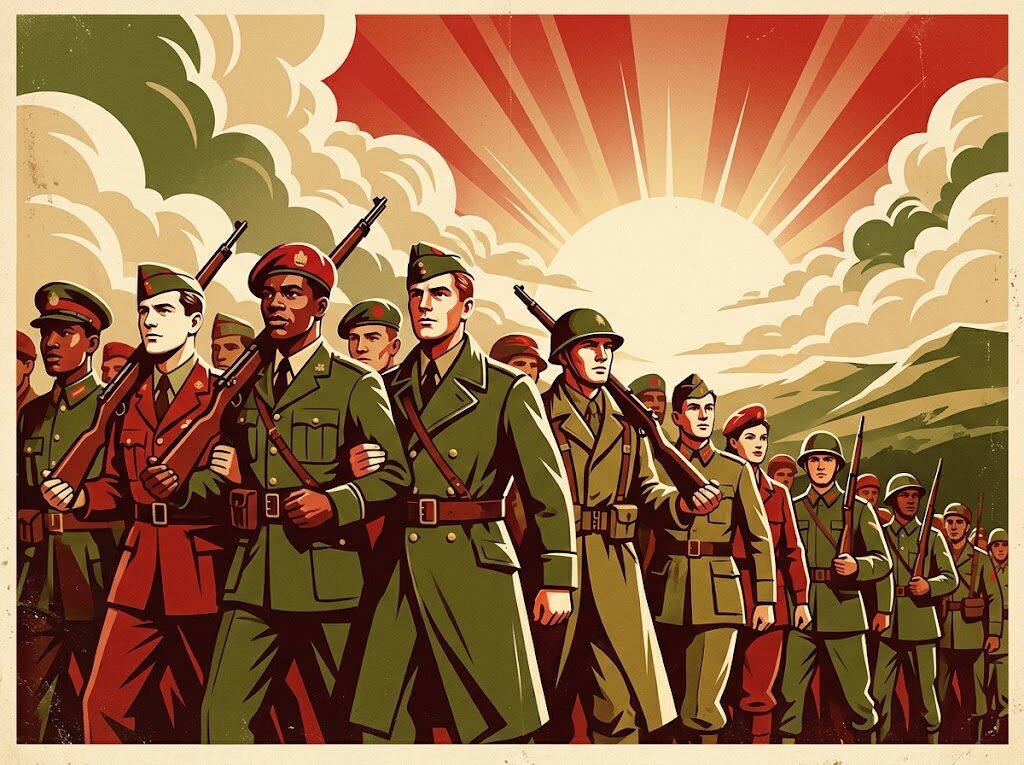


 +1 medal each when approved, +1 more for the victor







 Private

 Private

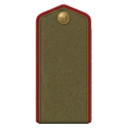 Krasnoarmeyets
 Schütze
 Hungary
 Finland
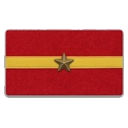 Nitōhei