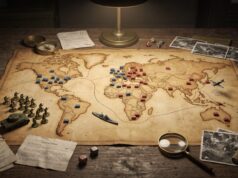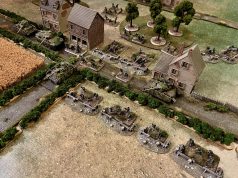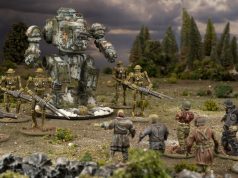


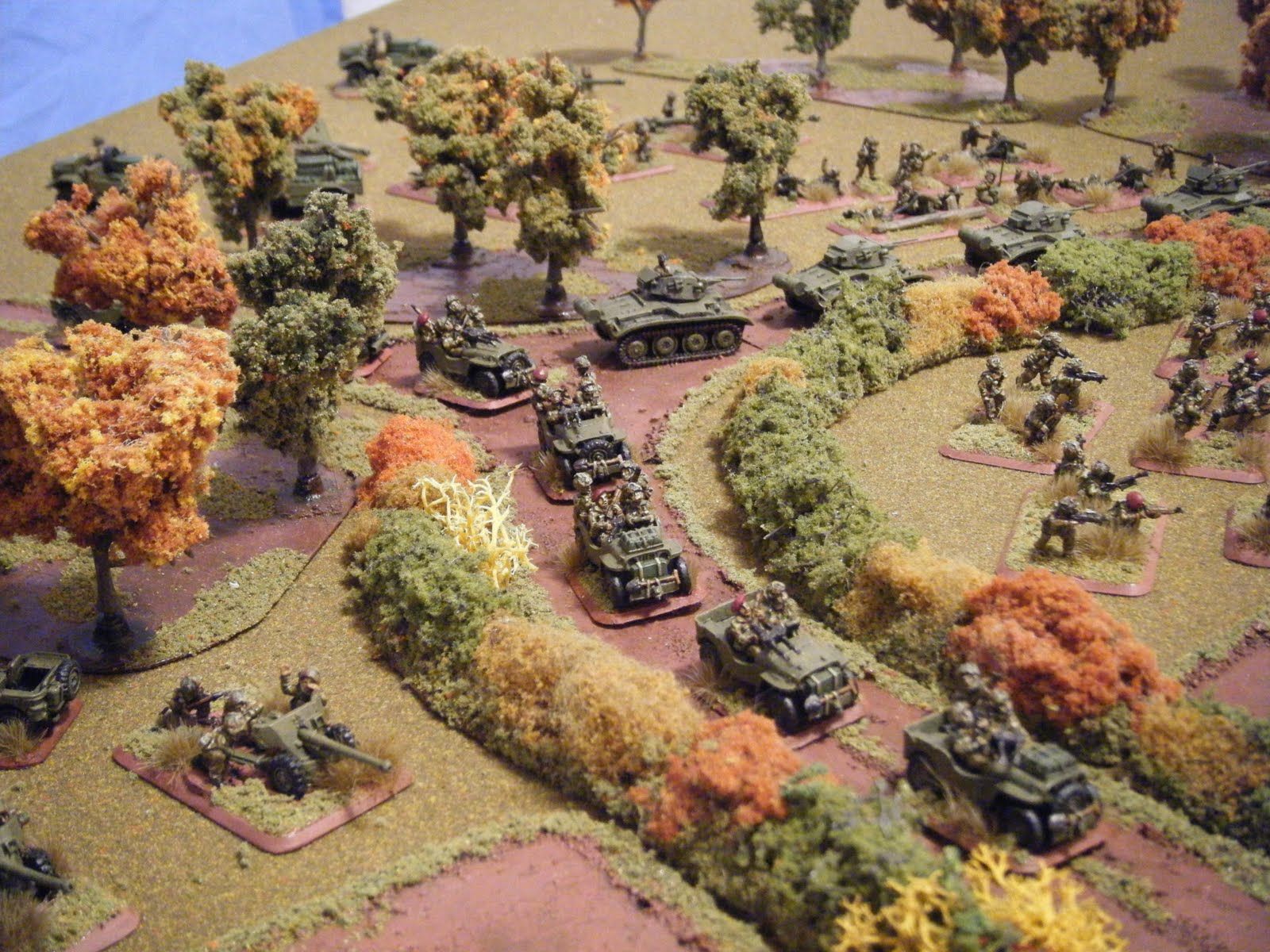
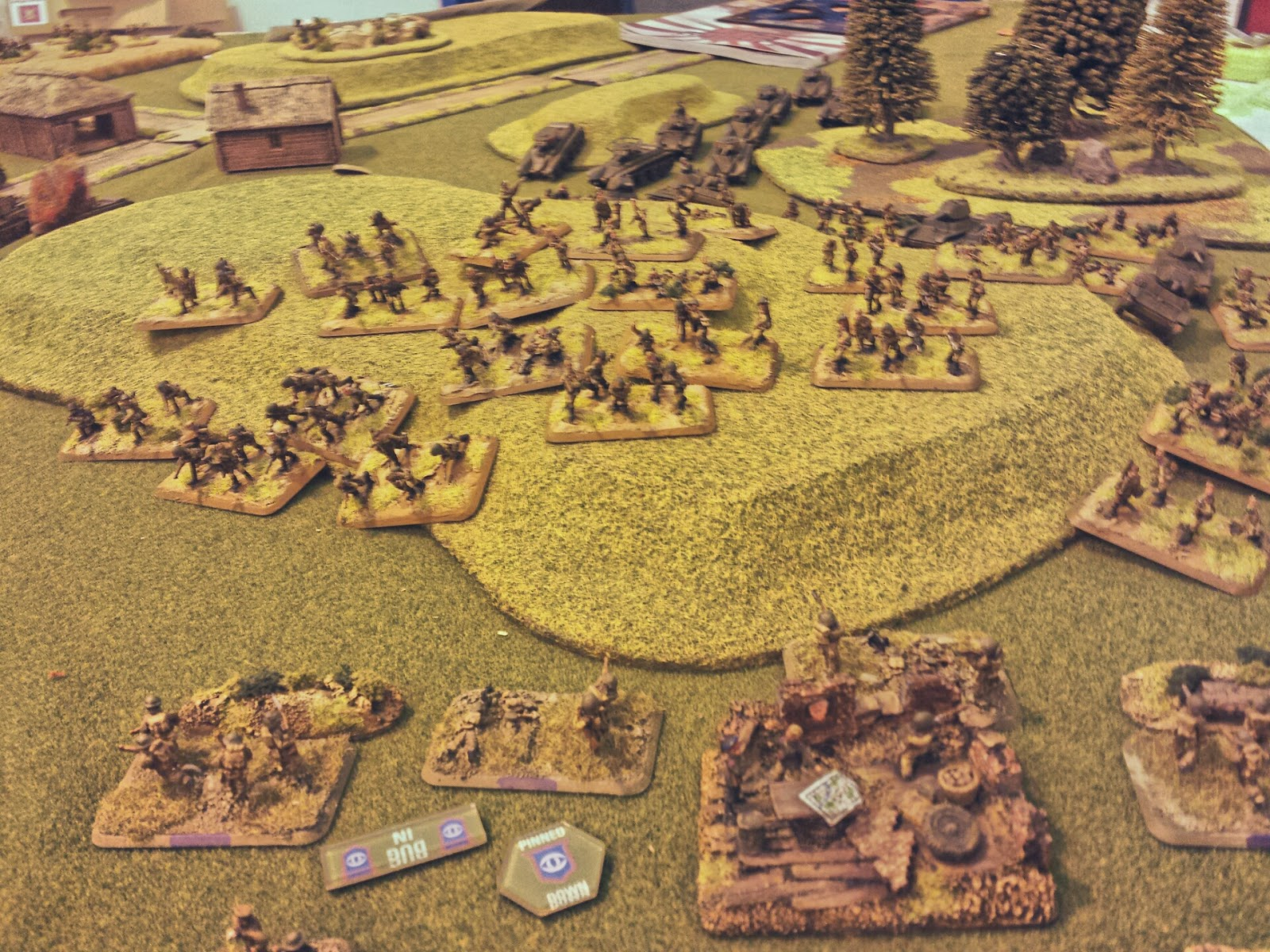
Bolt Action is a platoon-level game. Most of us play it with a handful of squads, an armoured platoon and a support level platoon, and it plays brilliantly at that size. But I kept wanting more: a full rifle company, its supporting armour, the mortars and anti-tank guns lined up behind them, all on one table. I am sure i am not the only one who felt that “WHAT IF… WE HAD FLAMES OF WAR ON BOLT ACTION RULESET”
The answer turned out to be simple. Swap the 28mm miniatures for 15mm, keep the rules and the measurements exactly as they are, and play bigger.
It works. At this scale the game becomes something else… the ranges of tanks firing at each other becomes more believable. The battlefield felt grand.
Why 15mm works without changing the ranges
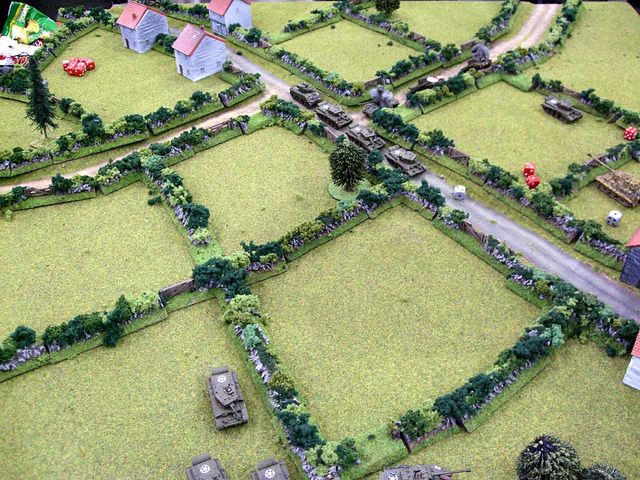
Most scale conversions force you to rework movement and weapon ranges. This one doesn’t. Keep inches as inches. The ground scale is simply more compressed: a 15mm model on a 6×4 table covers roughly the same footprint as a 28mm one on a much larger table.
What you gain:
- More units on the same table.
- Terrain that looks right. Buildings, hedgerows and treelines are in better proportion to the units fighting around them.
- Real combined-arms play. With several platoons plus support, you can hold a reserve, commit a second wave, and build a proper fire base.
15mm Force Organisation
The core idea: each formation is represented by a small number of bases, and each formation gets one order die. Fewer dice in the bag means faster turns, even with far more models on the table.
Infantry
Rifle units
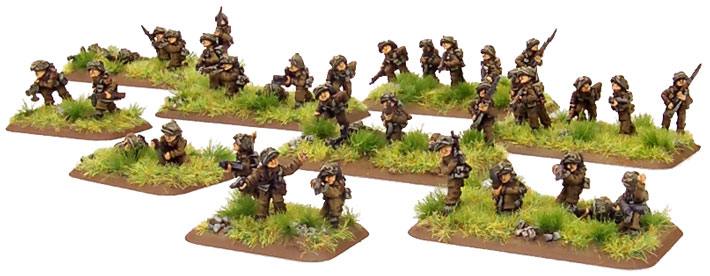
- A ten-man unit is represented by two bases of five 15mm figures.
- Each base is a visible half of the unit, so it’s easy to read the table at a glance.
Officer
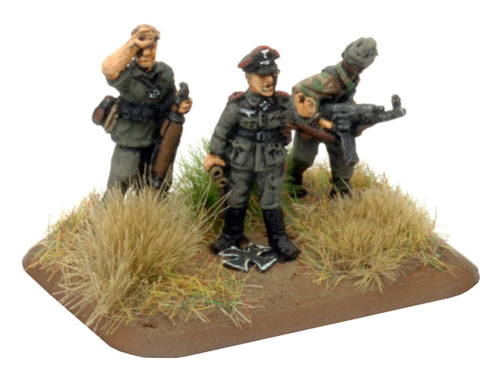
- An officer, with one or two accompanying soldiers, is represented by a single base of two or three figures.
Order dice
- The officer and the two rifle units under his command share one order die. The officer is mandatory, so every infantry platoon has a command element.
- Every other small team (for example a sniper, a flamethrower team or an observer) gets its own order die.
One Die, One Order
Everyone in the platoon takes the same order.
When the platoon’s die is drawn, the player gives a single order, and the officer and both rifle units carry it out together:
- Fire: every unit that can see a target fires.
- Advance: the whole platoon moves and may fire as normal for that order.
- Run: the whole platoon runs.
- Down: the whole platoon goes to ground.
- Ambush and Rally: both apply to the platoon as one.
There are no split orders. If the platoon advances, nobody stays behind to provide covering fire. That is a deliberate choice. It keeps the system fast and means you decide at the platoon level, not squad by squad. It also pushes you to think about which platoon should move and which should hold, which is what a company commander would be doing anyway.
Choosing Targets
The attacker decides which unit in a platoon is shot at, but he can only pick what he can see.
When a platoon is targeted, the opponent chooses which of its units takes the fire. He can pick any unit he has a clear line of sight to.
Singling out the officer
If the rifle units block the line of sight to the officer, the officer is assumed to be somewhere inside the platoon, and he cannot be singled out. The attacker must target one of the visible units instead.
If the attacker has a clear line of sight to the officer’s base, he may target the officer directly and try to take him out.
Pins still go on the platoon as a whole, as described in the Pinning section.
Armoured Platoons
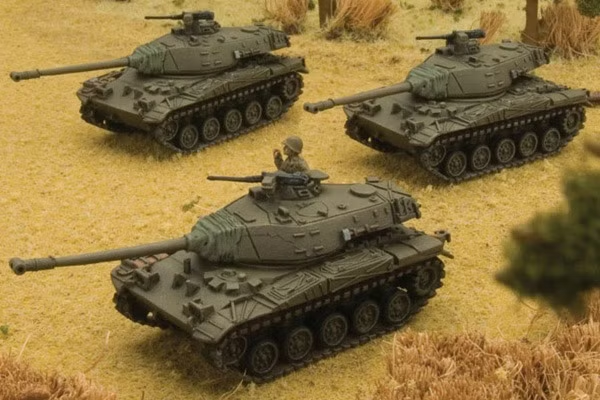
No special basing. Each tank is mounted individually.
A platoon is two or three tanks with one of them being the tank commander.
The platoon gets one order die, and all tanks take the same order.
Heavy Weapons and Artillery Platoons
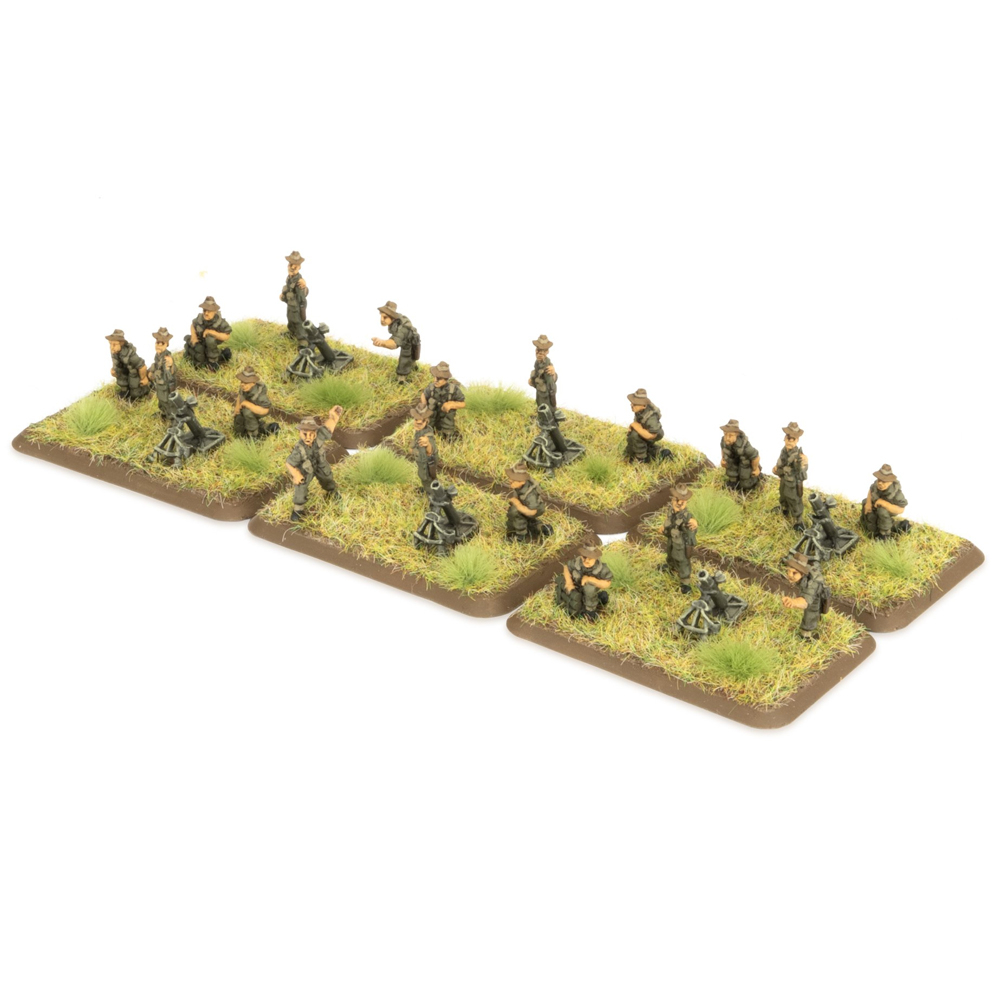
The platoon gets one order die.
A platoon is a minimum of two weapons of the same or complementary types (for example two mortars, two anti-tank guns, or two MMGs).
The platoon takes the same order across all its weapons.
Quick reference
| Formation | Models | Order dice |
|---|---|---|
| Rifle platoon (officer + 2 rifle units) | Officer base (2-3 figs) + 2 x 5-man bases per rifle unit | 1 |
| Small team (sniper, flamethrower, etc.) | Single base | 1 each |
| Armoured platoon | 2-3 tanks | 1 |
| Heavy weapons / artillery platoon | Minimum 2 weapons | 1 |
Pinning
Pinning works exactly as it does in standard Bolt Action. The only change is what counts as “the unit.”
In the original game, each squad is a unit with its own order die and its own pin markers. In this 15mm version, the unit is the platoon: the officer and the rifle units under his command share one order die, so they share one pin total as well. Pins land on the platoon as a whole.
In practice
- Pin markers go on the platoon, not on an individual base.
- Every pin applies to the whole platoon when it needs to take an order test, regardless of which base was shot at.
- Down and Rally orders work as normal, but they apply to the whole platoon, so one die clears the pins for everyone.
- Nothing new needs to be learned. Anyone who knows Bolt Action already knows how pinning works.