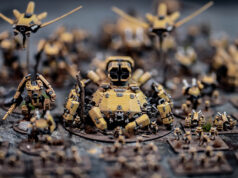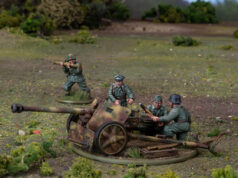

Following our Infantry Command Groups and Armoured Platoons, this is how we handle the big guns. As always, we stay as close to the Bolt Action Third Edition rules as we can, and only change what’s needed to keep 15mm epic games of around 2500 points per side moving. Anything not covered here falls back to the standard rules.
Definitions
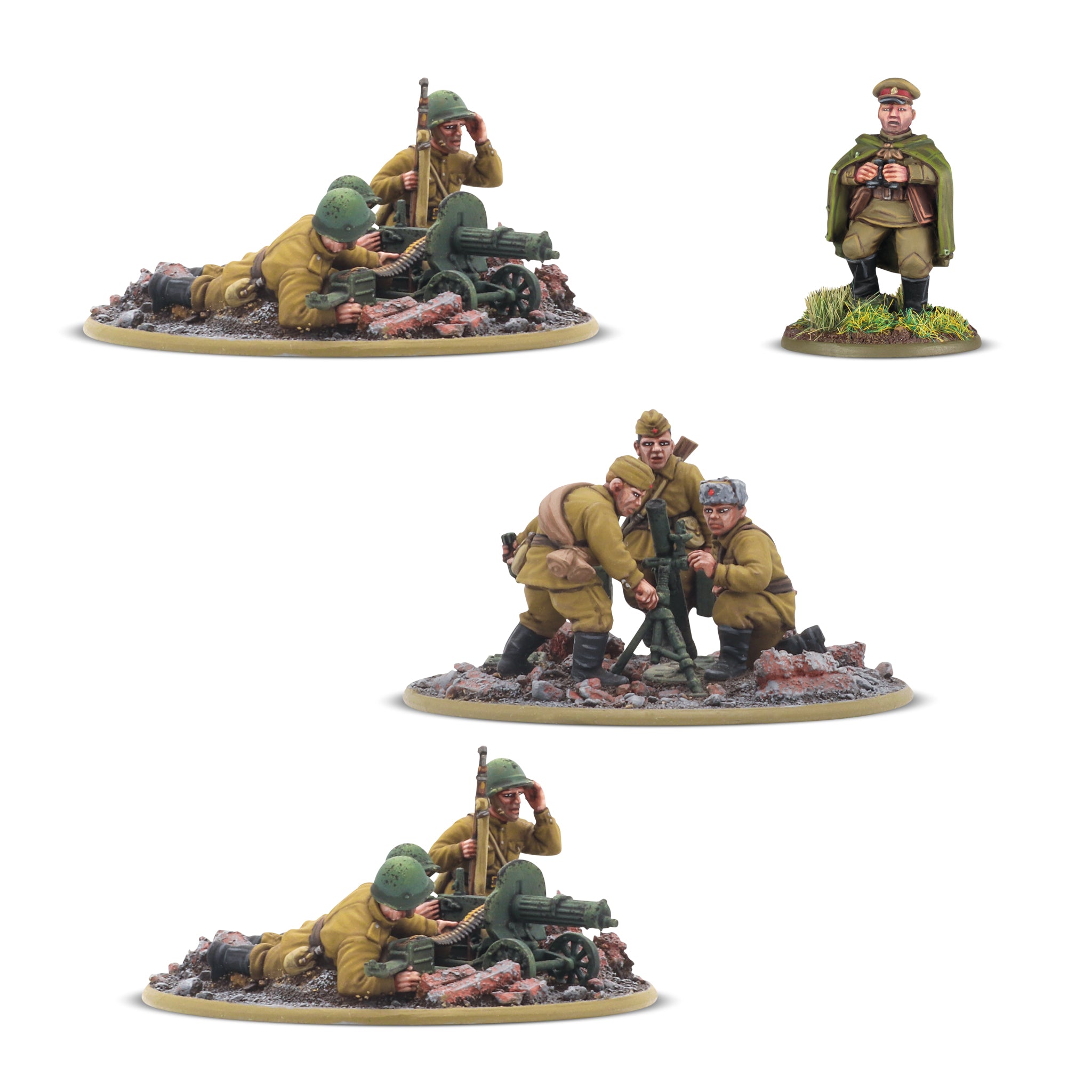
- Heavy Weapons Platoon: 2 to 5 pieces: two core pieces and up to three additional pieces.
- Platoon core: the two mandatory pieces. Together they receive one order die and act as one unit for orders, pins and morale, the same way an officer and his rifle platoons share one die in a Command Group.
- Additional pieces: each additional piece receives its own order die and acts as a separate unit, with its own orders, pins and morale, as in the standard rules.
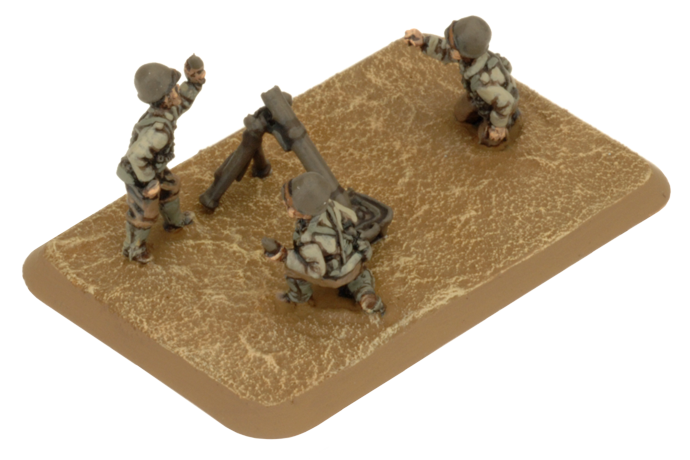
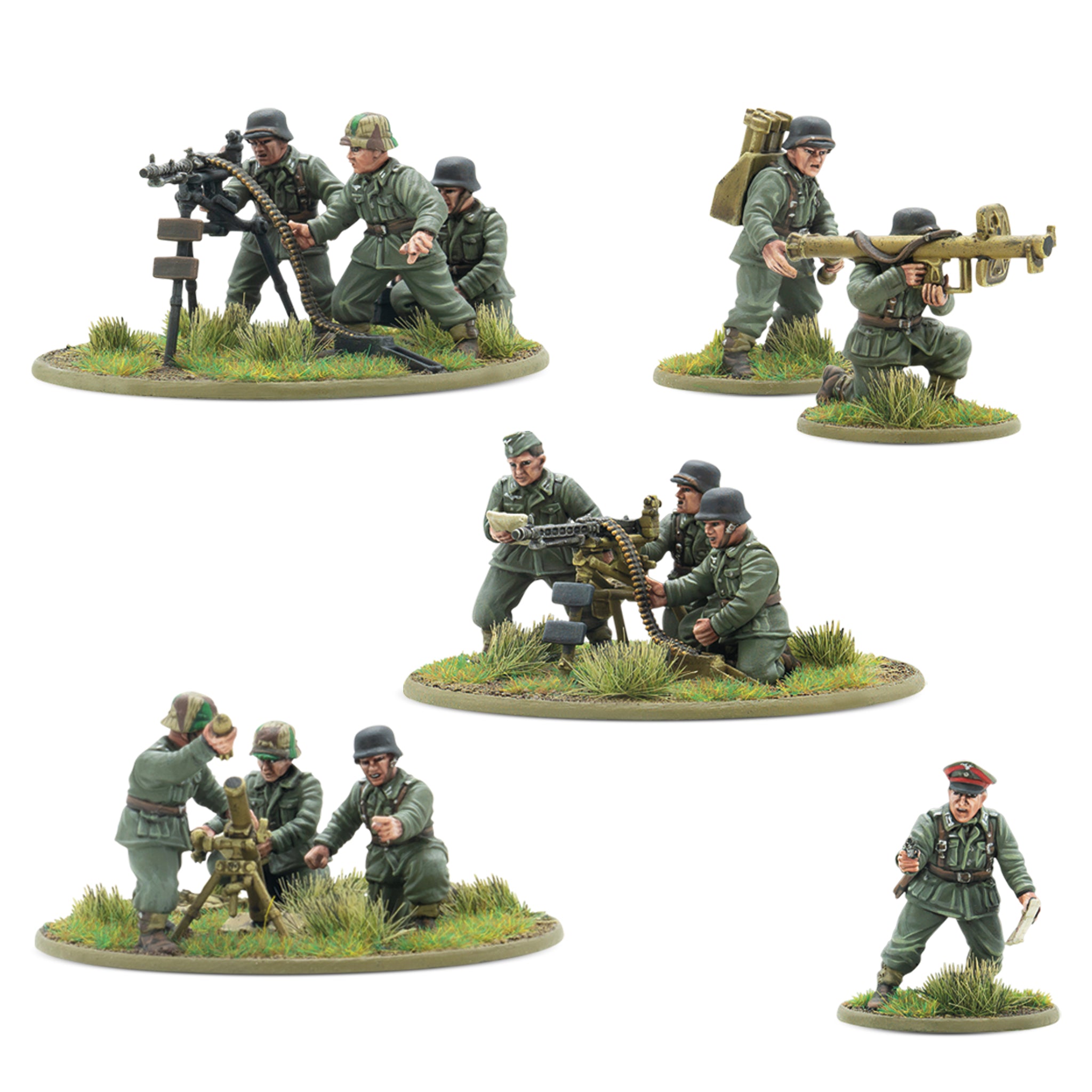
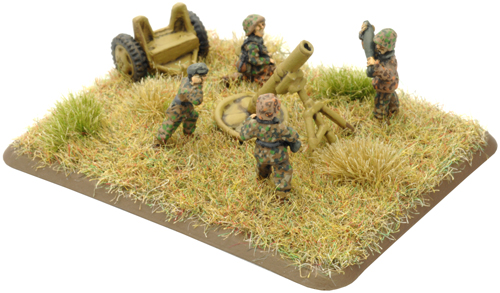
- Eligible pieces: medium machine guns, mortars, anti-tank guns, field guns and howitzers, and anti-aircraft guns, each with its full crew. Types can be mixed freely, so an MMG and a mortar can share the core die.
- Experience: both core pieces have the same experience level, so the core has one morale value.
Example: two MMGs and two mortars, with the MMGs as the core, put three dice in the bag: one for the two MMGs, and one for each mortar.
Small teams such as snipers, flamethrowers and man-portable anti-tank teams (bazooka, PIAT, Panzerschreck) are not part of a Heavy Weapons Platoon and each keep their own die.
Orders
- The core’s die gives one order, and both core pieces carry it out. Neither can take a different order.
- Additional pieces act independently on their own dice. They don’t have to follow the core’s order and can be activated before or after it.
- Each core piece still follows its own weapon rules for that order. If the core is given Advance, a piece that can’t fire after moving (a Team or Fixed weapon) moves but doesn’t fire, while a piece that can fire does so.
- Each piece moves its own full distance, and there is no coherency distance, the same as an Armoured Platoon.
- On Ambush, both core pieces react together. Each with a line of sight (and, for fixed guns, the target in its arc) may fire at the triggering enemy unit.
Shooting
- Each piece fires its own weapon. Two core MMGs give two MMG attacks.
- The core may split its fire between targets. Hits, damage and pins are worked out per piece, as normal.
- Indirect fire follows the standard rules for each piece. Every mortar or howitzer rolls its own ranging-in attempt, and a piece that has ranged in stays ranged in on that target as long as it keeps firing at it. One piece ranging in does not range in the others.
- The core is one unit for line of fire. Its two pieces may fire past each other, and the 1″ restriction on firing past friends does not apply between them. Additional pieces are separate units and follow the standard rule.
Shooting at a Heavy Weapons Platoon
- The attacker chooses which piece to fire at, from those he has a clear line of sight to.
- Casualties come only from the piece that was targeted. They are never taken from the crews of other pieces.
- The owner chooses which crew to remove from the targeted piece, as normal.
- A morale check is taken when the targeted piece loses half or more of its crew to one enemy unit’s fire. If a core piece fails, both core pieces are destroyed, since they share one order die. If an additional piece fails, only that piece is destroyed.
Pinning and Morale
- Pins are shared by the two core pieces. One marker is placed on the core whenever an enemy unit fires at either core piece and scores at least one hit, in the usual way.
- Additional pieces take their own pins, as in the standard rules. Pins on an additional piece never affect the core, and pins on the core never affect an additional piece.
- The core takes one order test when activated, using its shared pin total. Failed order tests and FUBAR results apply to both core pieces.
- If the core’s pins equal or exceed its morale value, both core pieces rout and are destroyed. Additional pieces are not affected.
- Losing a core piece does not split the die. The surviving core piece keeps working on the core’s die.
Officers
A Heavy Weapons Platoon has no officer of its own. Because the core and every additional piece hold their own dice, an officer from a nearby Command Group can use “You men, snap to action!” to order any of them, which makes a well-placed officer the natural partner for a gun line.
Changes from Standard Bolt Action (Third Edition)
| Standard rule | In this adaptation |
|---|---|
| Each weapon team has its own order die | One die for the platoon core (two pieces, mixed freely); each additional piece keeps its own die |
| Pins and routing per team | Shared by the two core pieces, and a rout destroys both; additional pieces as standard |
| Each team takes its own order test | One order test for the core; additional pieces as standard |
| Teams may fire through their own unit only | The two core pieces count as one unit for this |
| Owner chooses casualties from anywhere in the unit | Attacker picks the target piece, and casualties come only from it |
| Indirect fire ranges in per weapon | Unchanged: each piece ranges in on its own |