

Anyone who sits down to play a Cthulhu RPG will hear the names Cthulhu, Yog-Sothoth, Nyarlathotep and Azathoth sooner or later. Newcomers often worry that they need to read a shelf of Lovecraft first. You don’t. This guide covers the big four and ends with how little lore you actually need.
What is the Mythos?
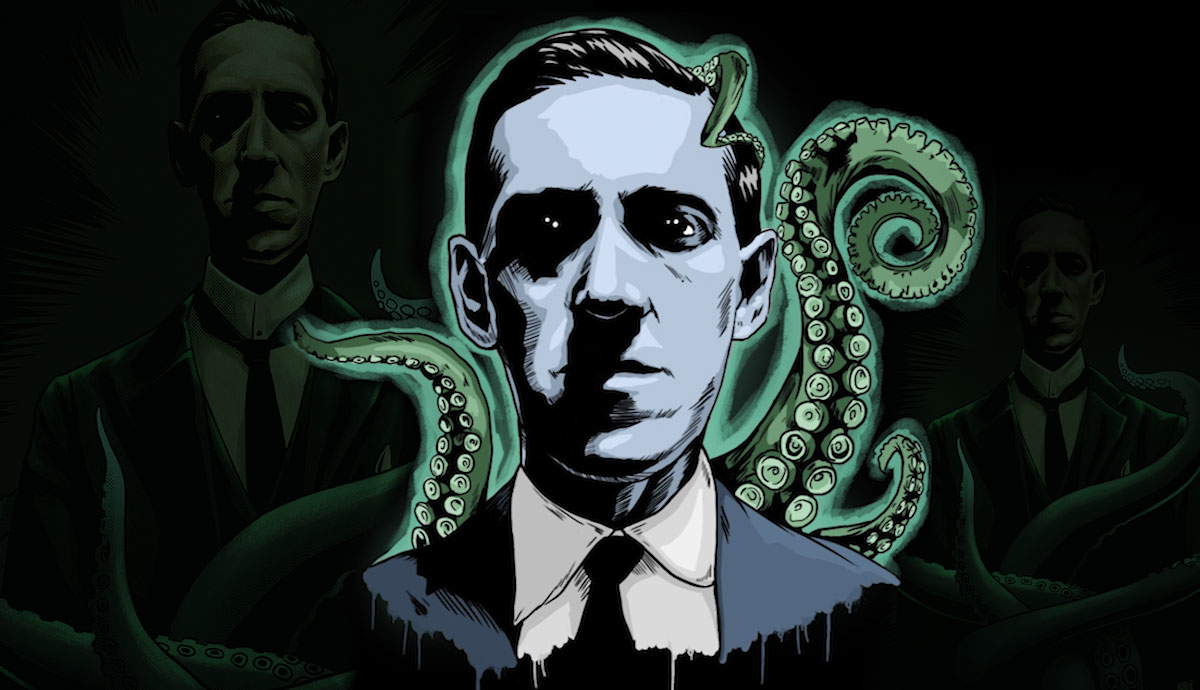
The Cthulhu Mythos is the shared setting that grew out of H.P. Lovecraft’s stories in the 1920s and 30s. The core idea is cosmic indifference. Vast, ancient beings exist beyond human understanding, and they don’t hate us. Most don’t notice us at all. The horror comes from learning how small humanity is, not from being hunted by monsters.
One note on terminology. Players often talk about “Great Old Ones” and “Outer Gods” as separate categories. Lovecraft himself wasn’t that tidy about it, and much of the neat classification came from later writers and from the games. Treat the labels as handy shorthand rather than canon law.
Cthulhu
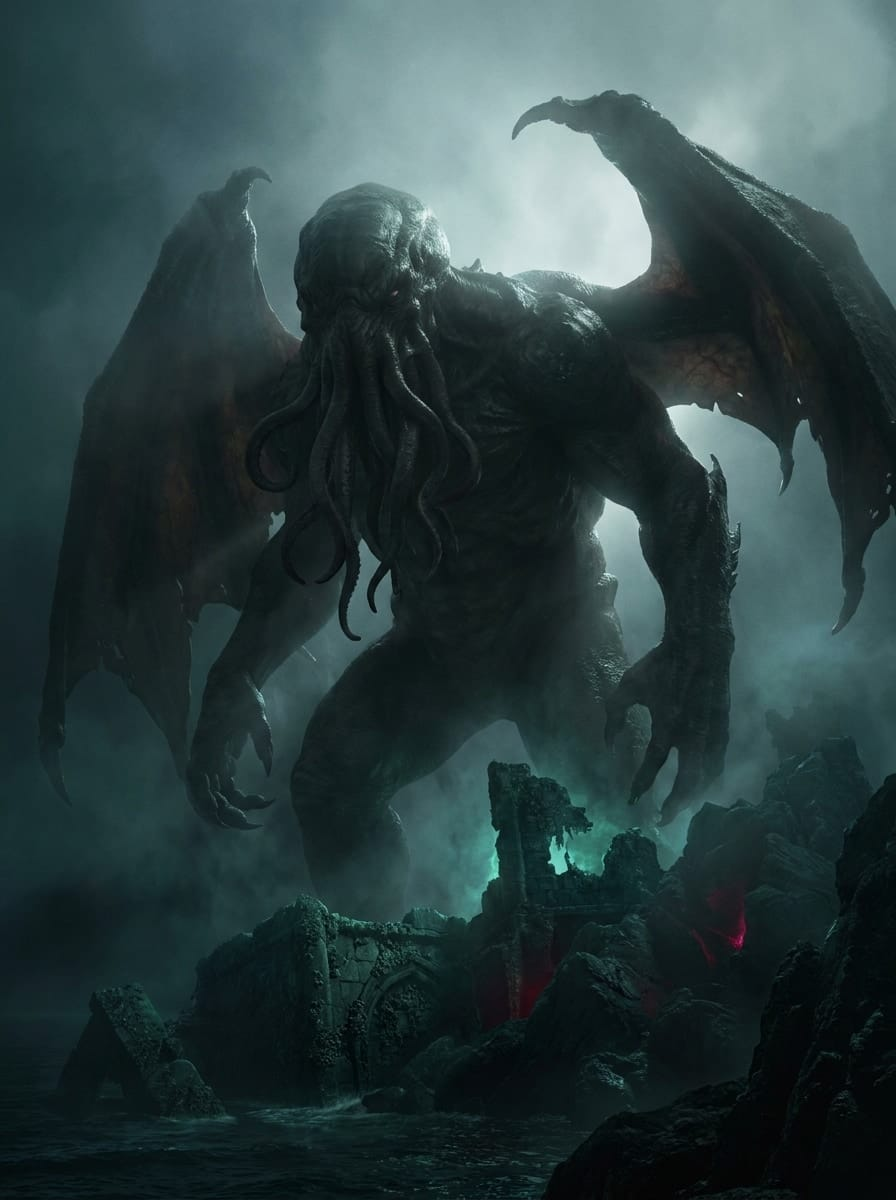
The face of the Mythos, and the first to appear in print, in the 1926 story “The Call of Cthulhu”. He is a colossal being, often described as a mix of octopus, dragon and human, who lies dead-but-dreaming in the sunken city of R’lyeh beneath the Pacific. His dreams reach into the minds of sensitive people, such as artists and the mentally fragile, and his cults wait for the stars to come right so he can wake.
- What he means in play: Cthulhu is usually a distant, looming threat rather than something you fight. Cults and Deep Ones do his work. If he actually appears, it’s the climax of a campaign.
Yog-Sothoth
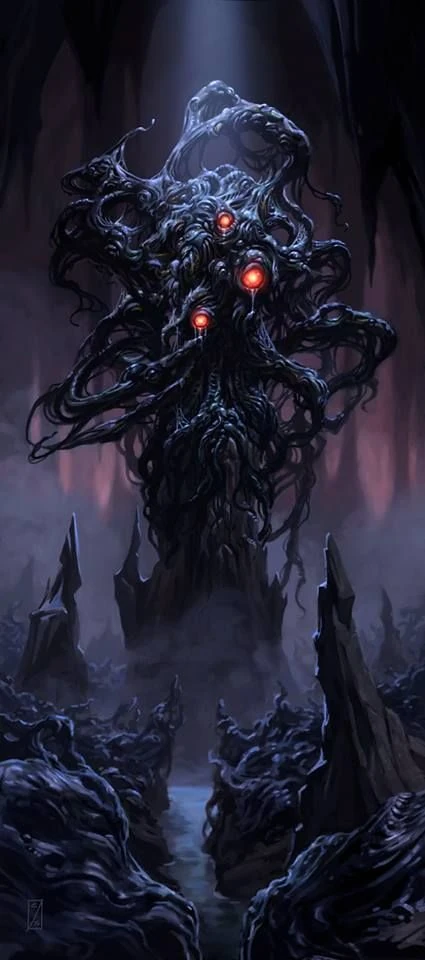
The least human of the four. Yog-Sothoth is described as existing outside normal time and space, as “the Key and the Gate”, a being connected to every point in space and time. He appears most famously in “The Dunwich Horror”, where sorcerers try to use him to open the way for his return.
- What he means in play: He’s the god of forbidden knowledge and gateways. If your scenario involves rituals, dimensional doors, or books that shouldn’t be read, Yog-Sothoth is probably nearby.
Nyarlathotep
The most active and personable of the great powers. In Lovecraft’s writing Nyarlathotep acts as a messenger and servant of the Outer Gods, but he walks the Earth and takes many forms, often a charismatic human figure. He is often called the Crawling Chaos, and he drives much of the manipulation, cult activity and corruption in Mythos stories.
- What he means in play: If your investigators meet a magnetic stranger who seems to know too much, treat that stranger with suspicion. Nyarlathotep is the Mythos’ great trickster and a favourite villain for campaigns.
Azathoth
Lovecraft described him as the “blind idiot god”, a mindless force at the centre of the universe, surrounded by the maddening piping of flutes and the drums of lesser entities. He is chaos at the heart of creation rather than a being with plans.
- What he means in play: Azathoth is almost never encountered directly. He’s the ultimate answer to “why does any of this matter?”, and he is a symbol of how little the universe cares.
How they relate
| Entity | Key idea | Typical role in a scenario |
|---|---|---|
| Cthulhu | Sleeping, dreaming god-monster | Cult threat, Deep Ones, coastal horror |
| Yog-Sothoth | The Key and the Gate | Rituals, portals, forbidden tomes |
| Nyarlathotep | The Crawling Chaos | Manipulator, cult leader, campaign villain |
| Azathoth | The blind idiot god | Cosmic backdrop, rarely met |
How much do you need to know to play?
Very little. For players, almost nothing. Your investigator doesn’t know the Mythos either, and that ignorance is part of the experience. Walking in cold is often better, because the Keeper gets to reveal things as your character stumbles into them.
For Keepers, a working knowledge of the names above and the themes of the specific scenario you’re running is enough. Scenarios come with the lore built in. You don’t have to memorise anything beyond what’s on the page.
Two tips:
- Don’t info-dump. Lore works best in small pieces: a torn book page, an odd symbol, a rumour in a harbour pub.
- Keep the mystery. If you explain everything, the sense of dread disappears. Let some things stay unexplained.
If you do want to read some Lovecraft
Start with the short stories behind these names: “The Call of Cthulhu” and “The Dunwich Horror”. They are short, and they show you exactly where the games get their atmosphere. Be aware that Lovecraft’s work reflects the prejudices of his time, and many modern players engage with the Mythos while approaching those elements critically.
Final thought
The names matter less than the feeling. A newcomer who understands that the universe is vast, old and uncaring already knows what the Mythos is about. The rest is detail you can learn at the table.